The Science Behind Polarized Training
The Science Behind Polarized Training
In the world of endurance sports, "no pain, no gain" has been the mantra for decades. Athletes believed that to get faster, every workout had to be hard. But modern sports science has turned this idea on its head with Polarized Training.
What is Polarized Training?
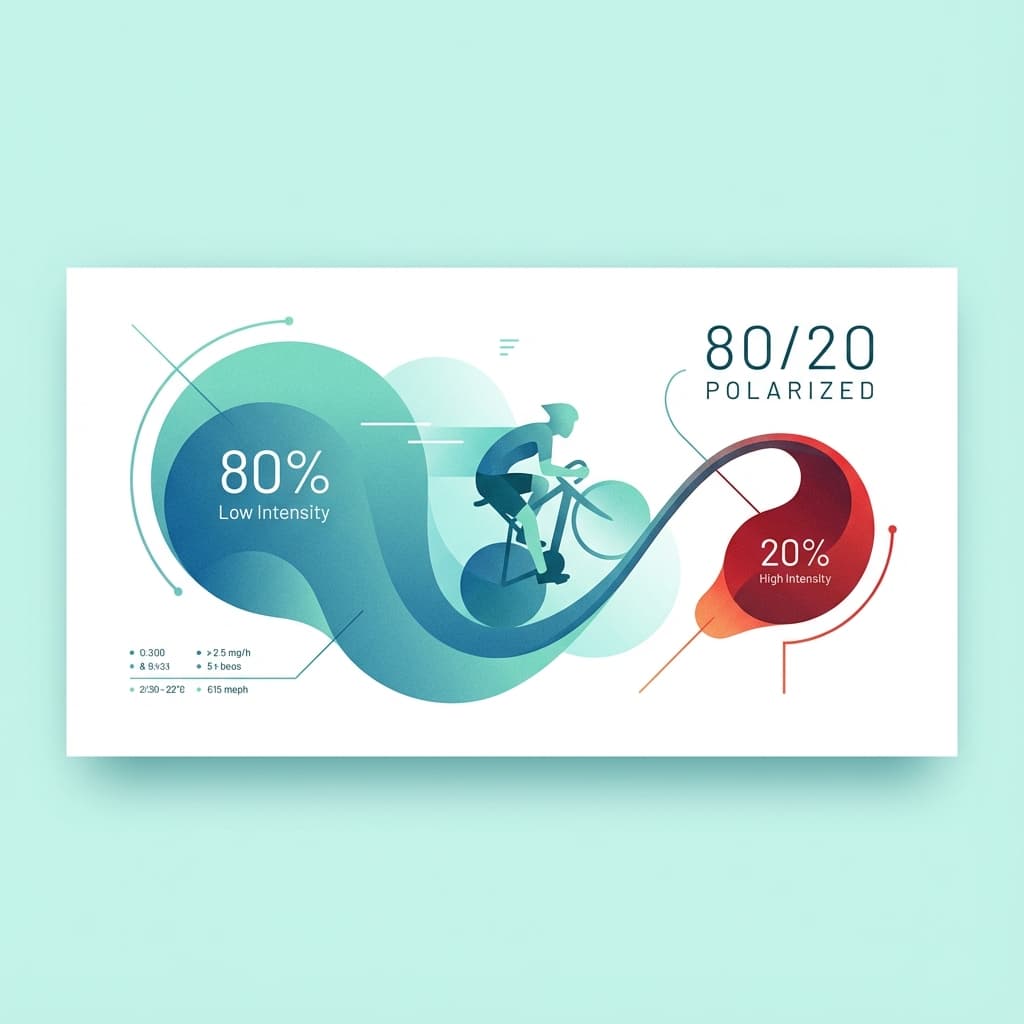
Polarized training is often referred to as the 80/20 rule. The concept is simple but counterintuitive:
- 80% of your training sessions should be at low intensity (Zone 1 or Zone 2).
- 20% of your sessions should be at very high intensity (Zone 3 or above in a 3-zone model).
- virtually 0% of your training should be in the "moderate" or "threshold" zone (often called the "black hole" of training).
Why Go Slow to Get Fast?
When you ride at a low intensity (below your aerobic threshold), you trigger specific physiological adaptations without accumulating excessive fatigue:
- Mitochondrial Density: You build more "power plants" in your muscle cells.
- Capillary Density: You improve blood flow to working muscles.
- Fat Oxidation: You teach your body to burn fat as a primary fuel source.
If you ride too hard during these easy sessions, you accumulate autonomic stress that prevents you from going truly hard on your hard days.
The High Intensity Factor
The remaining 20% of your training needs to be hard. We're talking intervals at 90-95% of your VO2 max. These sessions signal your heart to increase its stroke volume and your muscles to improve their lactate clearing capacity.
Conclusion
By avoiding the "middle ground" of moderately hard training, you stay fresh enough to crush your interval sessions while building a massive aerobic engine on your easy days. It requires discipline to go slow, but the results speak for themselves.